
The College of Engineering at the University of Louisiana at Lafayette has acquired a state-of-the-art Trimble surve
Civil Engineering Professor awarded a $149K NSF planning grant to develop technological tools for flood mitigation in flood-prone communities
Thu, 08/26/2021 - 8:10am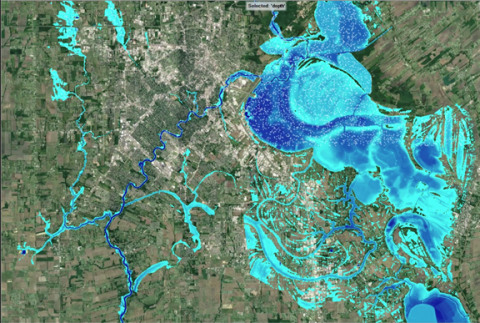
Dr. Emad Habib, Professor of Civil Engineering has received a National Science Foundation (NSF) grant entitled “Enhancing Community Engagement in Flood Mitigation Using Integrated Hydrodynamic Modeling and Multi-Scale Socio-Economic Risk Assessment.” This is a multi-disciplinary project with several UL Lafayette researchers from Civil Engineering (Dr. Trung Do), Louisiana Watershed Flood Center (Dr. Brian Miles and Dr. Mohamed Elsaadani), History (Dr. Liz Skilton), and Kathleen Blanco Public Policy Center (Dr. Stephen Barnes and Dr. Anna Osland ).
Sponsored by the NSF’s imitative on Smart and Connected Communities (S&CC), the project team will work with community stakeholders and groups in south Louisiana to co-develop technological tools that will promote a broader and more comprehensive understanding of flood risks stimulating consensus and support for flood mitigation strategies that can reduce the devastating and costly impacts of flooding. Working closely with community stakeholders, the project will provide diverse groups access to easily comprehensible information and customized tools to engage in decision making and discover common ground facilitating conflict resolution.
The objective of this planning project is to identify how recent advances in hydroinformatics technologies including hydrodynamic modeling, geospatial visualization, and fusion of heterogeneous data for socioeconomic analysis, can empower diverse stakeholders in flood-prone communities to understand flood risks and engage in formulating and supporting flood mitigation strategies.
 By advancing innovations in information and communication technologies, the project will support the National Science Foundation’s mission to accelerate the creation of the scientific and engineering foundations that will enable smart and connected communities and advance the national health, prosperity, and welfare when addressing flood risks and supporting economically viable and sustainable solutions for flood mitigation.
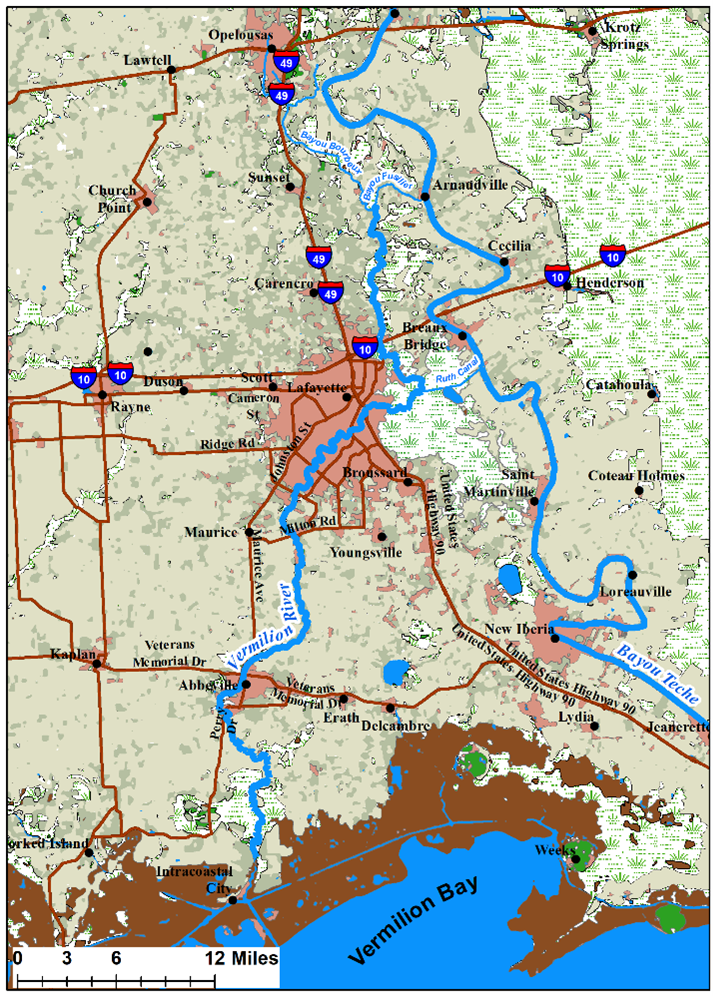
Figure Caption: The UL Lafayette project team will develop engineering and socio-economic tools to empower flood-prone communities in areas such as the Vermilion River Basin.